— A Case Study of the Inaugural “Micro Drama Volume” of World Chinese Literature
In recent years, Micro Dramas have risen rapidly across global digital platforms. From fragmented mobile viewing to cross-border content distribution, this highly condensed and fast-paced narrative form has become one of the most efficient cultural products of the digital age. As Micro Dramas begin to appear systematically in print and enter international academic discourse and film education systems, their cultural significance now extends well beyond online traffic metrics.
At the end of September 2025, the large-scale international journal World Chinese Literature, sponsored by the Chinese Writers Association of America (CWAA), published its inaugural issue titled the “Micro Drama Volume,” with global distribution through Amazon in the United States. Rather than serving as a simple anthology, this special volume adopts a “genre-focused” framework, presenting Micro Dramas as literary texts accompanied by theoretical engagement. It marks an important step in the evolution of Micro Dramas from platform-based content to a subject of literary and academic construction.
The volume includes the complete scripts of four Micro Dramas, each consisting of 60 episodes. It also features synopses and professional commentaries on 23 works from the “CWAA Cup · First Global Film & Television Micro Drama Literary Script Competition,” along with four academic essays written by senior researchers from the World Micro Drama Research Association. From textual practice to theoretical analysis, the journal seeks to establish a systematic framework for literary and media interpretation of Micro Dramas.
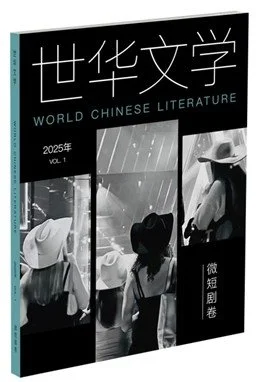
On October 18, the “Micro Drama Volume” held its official launch ceremony at the theater of The Flushing Library in New York. The event coincided with the Third International Chinese Original IP Film Festival, where nearly one hundred professionals from the fields of film and literature witnessed this publishing initiative centered on Micro Dramas. In addition to donating copies to the library’s collection, the film festival organizing committee purchased fifty copies to present to distinguished guests, enabling Micro Drama scripts in printed form to enter the hands of creators and researchers.
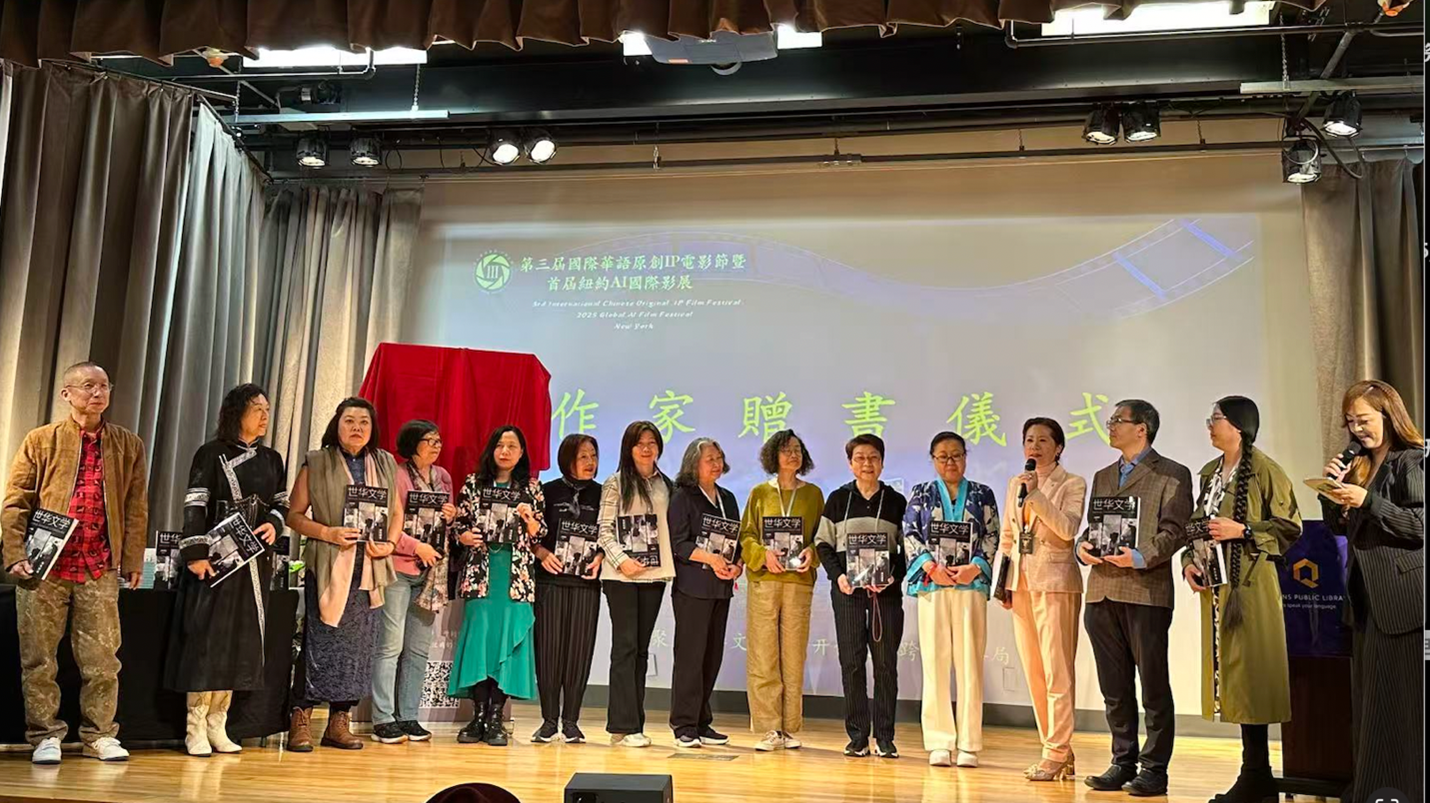
(Photo: Editor-in-Chief Li Xian of World Chinese Literature invites members of the inaugural editorial board and contributing authors to the stage to receive complimentary copies.)
At several subsequent international academic conferences, Micro Dramas became a focal point of discussion. On November 1, 2025, at the “2025 International Symposium on World Chinese Micro-fiction and the First ‘Huayan Cup’ Fiction Excellence Awards,” held at Zhejiang University of Media and Communications, Dr. Li Xian presented a paper titled “On the Structural Isomorphism Between Micro-fiction and Micro Dramas.” The paper argued that Micro-fiction and Micro Dramas exhibit a high degree of structural similarity in narrative compression, concentrated structure, and aesthetic ellipsis. Microelectronics capacity to contain a complete story within an extremely limited length provides literary resources for Micro Dramas, while Micro Dramas expand the cross-media life of text through audiovisual expression.
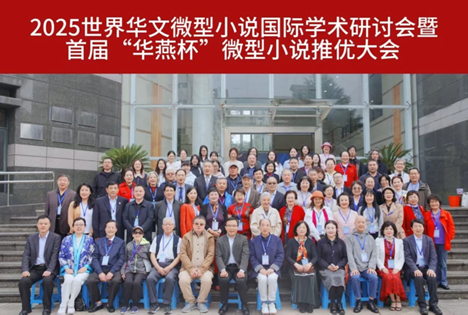
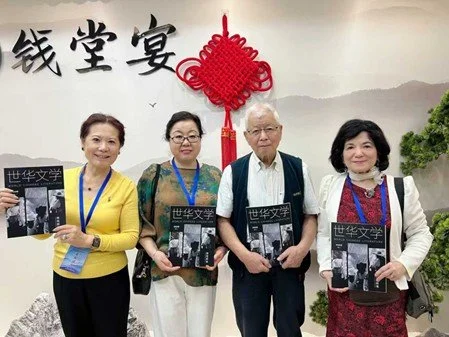
(Photo, from left: Li Xian, Editor-in-Chief of World Chinese Literature; Advisor Chen Ruilin; Advisor Chen Gongzhong; Advisor Zhang Feng.)
On November 14, at the “Eighth Symposium of New Immigrant Chinese Writers and the International Academic Conference on the Overseas Dissemination of Chinese Literature and Chinese Culture,” Micro Dramas were discussed within the context of overseas Chinese literary transmission. Speakers noted that new immigrant literature has long faced constraints imposed by language barriers and publishing mechanisms, limiting its international reach. The integration of Micro Dramas with artificial intelligence technologies is lowering the threshold for the visual adaptation of literature, making the cross-cultural experiences of overseas writers more visible and more widely disseminated.
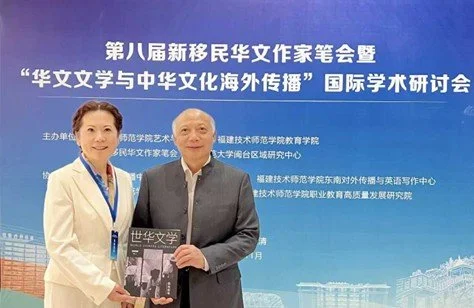
(Photo, from left: Li Xian, Editor-in-Chief of World Chinese Literature, and Professor Jiang Shuzhuo, Advisor.)
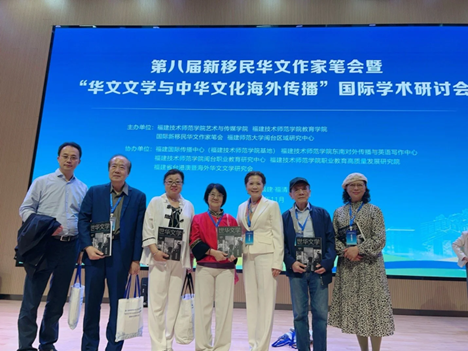
(Photo, from left: Advisor Li Liang; Advisor Yang Jilan; Advisor Chen Ruilin; Advisor Bai Shurong; Editor-in-Chief Li Xian; Advisor Jiang Shaochuan; Advisor Yan Xianghong (An Jing).)
On November 18, during a special lecture at the College of Foreign Languages of Huaqiao University, the synergistic effects between Micro Dramas and AI were further extended to the cultivation of cross-cultural communication professionals. The lecture argued that in the digital era, the role of foreign language specialists is shifting from traditional language converters to “cultural architects” and “communication curators,” responsible for content localization, narrative strategy design, and international coordination. As a cross-media narrative form, Micro Dramas are prompting a restructuring of literary, film, and communication education.
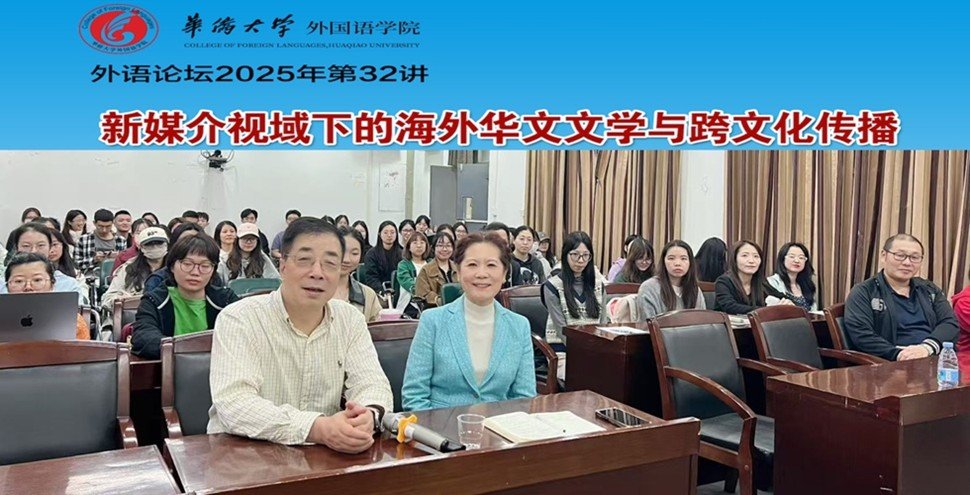
(Photo: Li Xian poses for a group photo with Dean Lu Zhi and graduate students.)
In January 2026, the Chinese Writers Association of America received a certificate of book donation and collection from the New York Film Academy. In addition to incorporating the “Micro Drama Volume” of World Chinese Literature into its library collection, the academy plans to use it as a supplementary textbook in film production and literature courses. This development indicates that Micro Drama texts are not only entering academic discourse but are also becoming integrated into international film education systems.
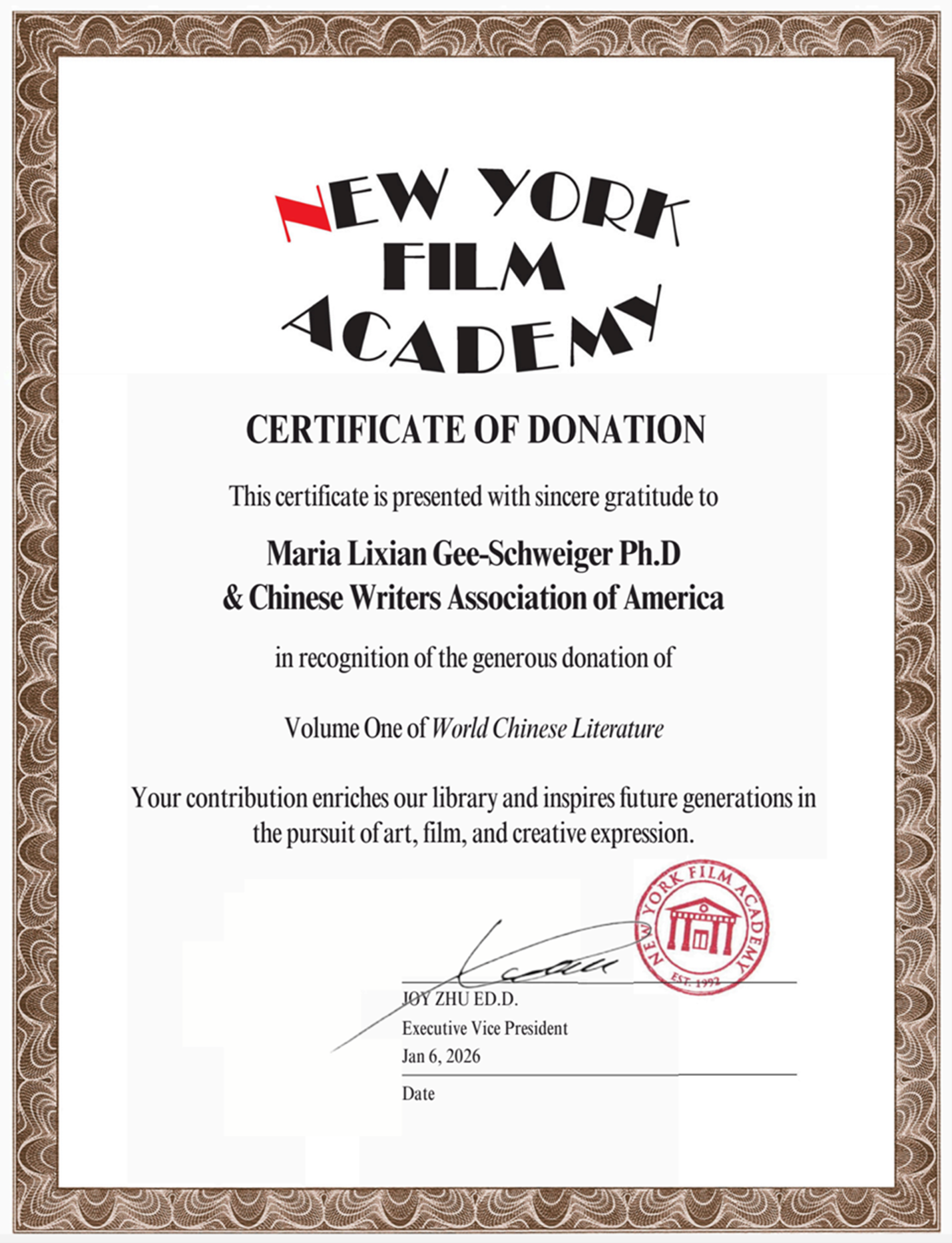
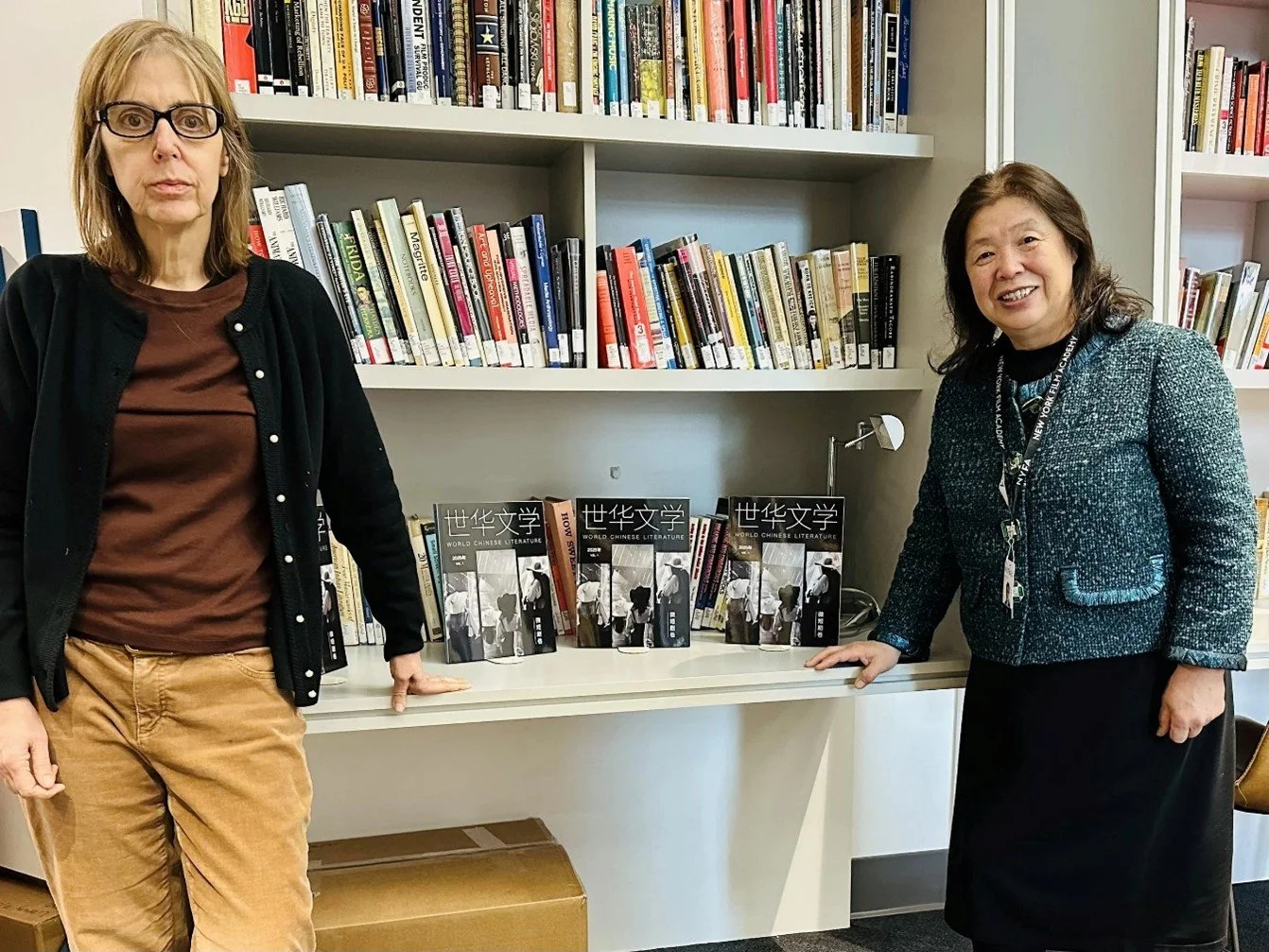
(Photo, from right: Dr. Joy Zhu, Executive Vice President of the New York Film Academy, and Ms. Marti Reppetto, Head Librarian, pose with World Chinese Literature.)
From mobile-screen blockbusters to a dedicated print volume, from international film festivals to university classrooms, Micro Dramas are undergoing a transformation of media identity. They respond to the fragmented reading and viewing habits of the digital age while opening new channels for the global dissemination of Chinese-language literature.
As literature no longer exists solely in textual form, and as audiovisual expression and artificial intelligence continue to lower creative thresholds, Micro Dramas may represent not merely a new narrative rhythm, but an обновed mechanism for cross-cultural expression. Within a global context, this highly compressed yet dynamic narrative form is injecting new media energy into Chinese-language literature and reshaping its pathways of transmission within world literature.
World Chinese Literature has now launched a global call for submissions for its 2026 “Prose Volume.” Continuing its editorial vision of serving world Chinese literature, the 2026 issue will be organized by region—Americas, Asia, Europe, and Oceania—with designated hosts and managing editors responsible for soliciting and selecting works in their respective regions. Through this editorial structure, World Chinese Literature aims to further promote exchange, writing, and dissemination of world Chinese literature across diverse genres and multicultural contexts.
To subscribe to World Chinese Literature, please visit the dedicated Amazon page:
(Reported by the Editorial Board of World Chinese Literature)